
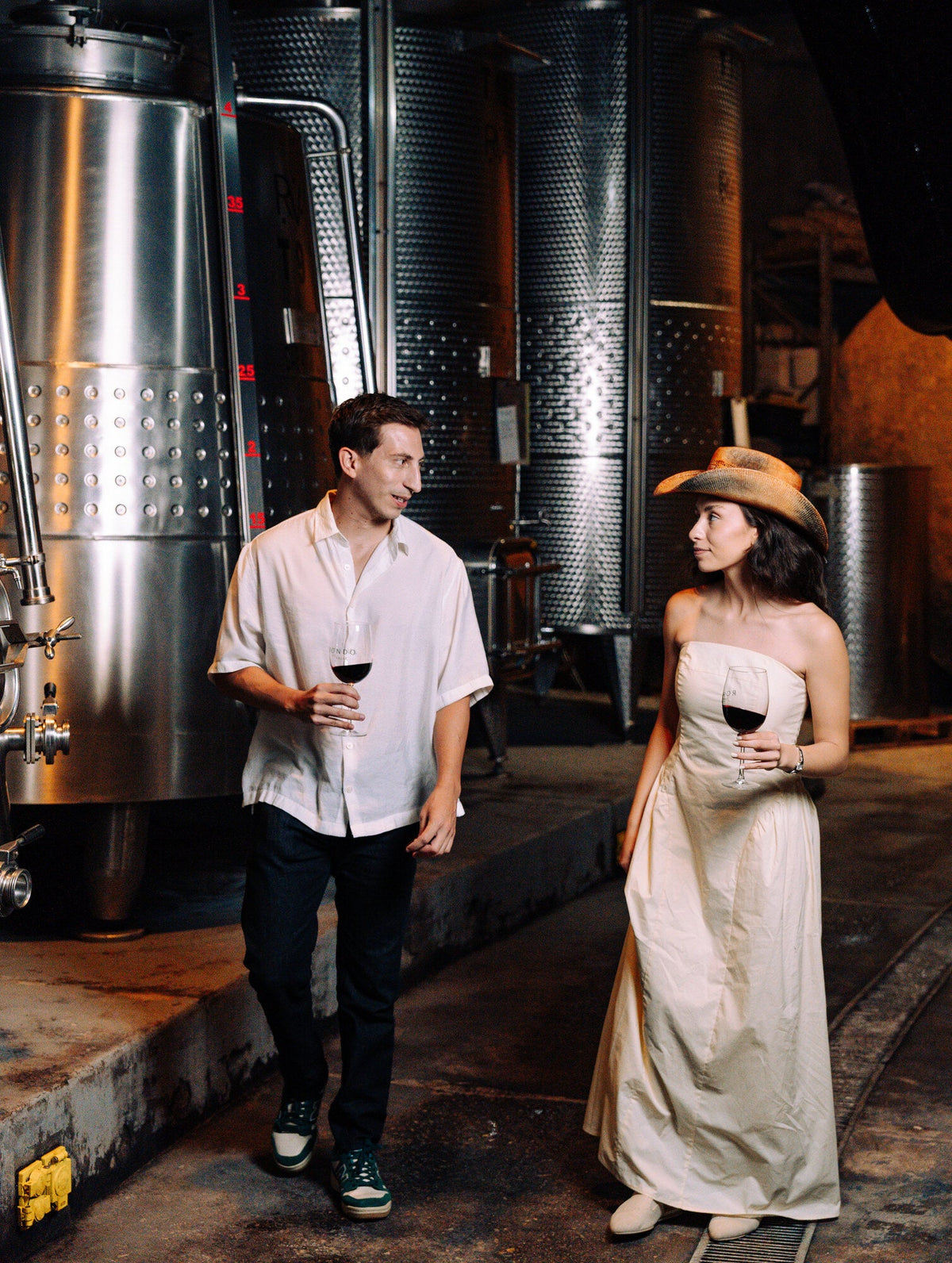
A winery visit in Valle de Guadalupe may begin with a glass, but it becomes far more meaningful when you understand what happened before the wine reached the table. Walking through the production area, seeing the equipment, and speaking with your host connects aromas and textures to real winemaking decisions.
This guide covers what to notice and what to ask, even if this is your first winery tour.
From vineyard to winery: the journey behind the wine
Winemaking begins long before a bottle is opened. Grapes are grown, harvested, received at the winery, sorted, and prepared for fermentation. From that point forward, the process changes according to the style the winemaker wants to create.
You do not need to memorize technical vocabulary. Focus on three simple questions: what happens at this stage, what decision is being made, and how might you notice it later in the glass?
Tanks and fermentation
Tanks make it possible to monitor fermentation, when yeast transforms grape sugars. Temperature, time, and skin contact all influence the result. When you see the tanks, ask what the winemaker is trying to preserve or develop at this stage.
Barrels and evolution
Not every wine follows the same route or spends the same amount of time in a barrel. If your tour includes the aging area, notice the vessels and ask what they contribute: texture, integration of aromas, or slower evolution. Oak is a tool, not an automatic measure of quality.
The cellar as a place for aging
A cellar helps create more stable conditions for wine to evolve. Beyond the photo opportunity, notice the temperature, light, and stillness of the space. Understanding the environment makes it easier to appreciate why storage matters before and after you purchase a bottle.
How to get more from the tasting
After the tour, the tasting becomes more than a list of aromas. Taste slowly and connect what you notice with what you have just seen.
- Look: observe color and clarity without searching for one “correct” answer.
- Smell: begin with simple families such as fruit, flowers, spice, or toasted notes.
- Taste: notice acidity, texture, dryness, and how long the flavor lasts.
- Ask: connect the sensation to the grape, fermentation, or aging choices.
Useful questions to ask during a winery tour
The best questions do not require previous wine knowledge. Try these:
- What defines the style of this winery’s wines?
- Which part of the process changes most from one label to another?
- How does the season change what visitors can see?
- Which wine should we taste first, and why?
- How should we store the bottle at home?
Planning your Valle de Guadalupe winery visit
Book ahead and review what the specific experience includes: the tour, number of wines, food pairings, or areas visited. Wear comfortable shoes, avoid strong perfume, and leave enough time between stops. If you will be tasting, arrange responsible transportation.
If you are visiting with a group or have dietary restrictions, contact the winery before your reservation. That allows the team to explain the options available for your booking without assuming substitutions.
A glass with more context
Seeing the tanks, walking through the cellar, and speaking with your guide changes the way you taste. The goal is not to leave as an expert. It is to recognize that each glass brings together farming, technique, time, and hospitality.
Ready to experience the process in person? Explore Rondo del Valle’s current winery experiences and choose the visit that fits your next Valle de Guadalupe itinerary. You can also learn more about Rondo del Valle before you arrive.
Cómo planear una boda destino vinícola ideal
Cinco vinos mexicanos para regalar con acierto